
Projects and technical architectures

A detailed project archive across research, products, and creative systems.

This page expands the portfolio into full project narratives. Each entry includes a summary, keywords, visual media, and links to code repositories, papers, or demos when available. The projects are presented in reverse chronological order and cover a range of applied AI, scientific computing, and software engineering work.

Research and engineering projects

Large-scale systems, simulations, and AI pipelines

These projects combine applied AI, scientific computing, distributed architectures, and deployable software. Each visual section now uses a compact carousel so the explanations have more breathing room and the imagery remains tidy.

Skysafe

A distributed, open-source compliance assistant for BAZL operational risk assessment workflows.

2026

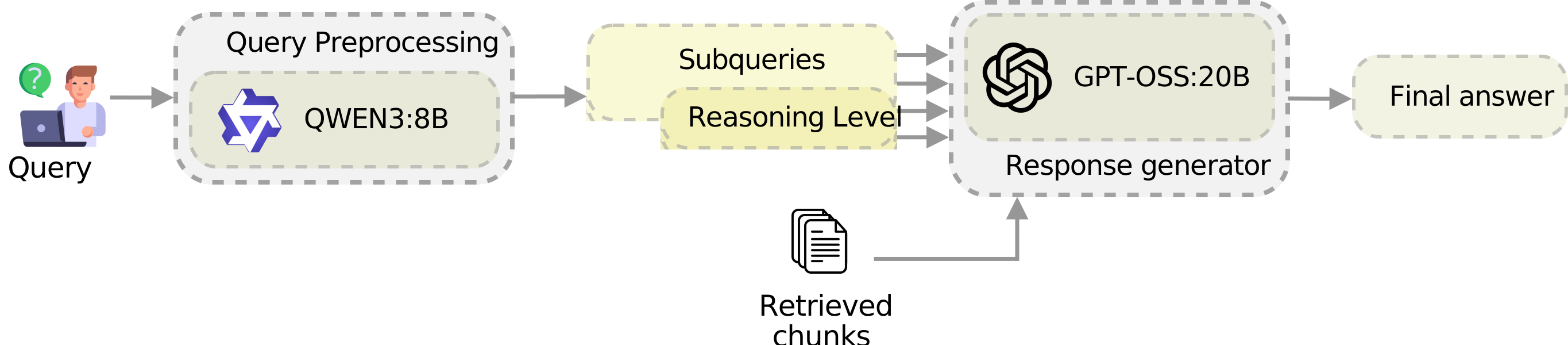
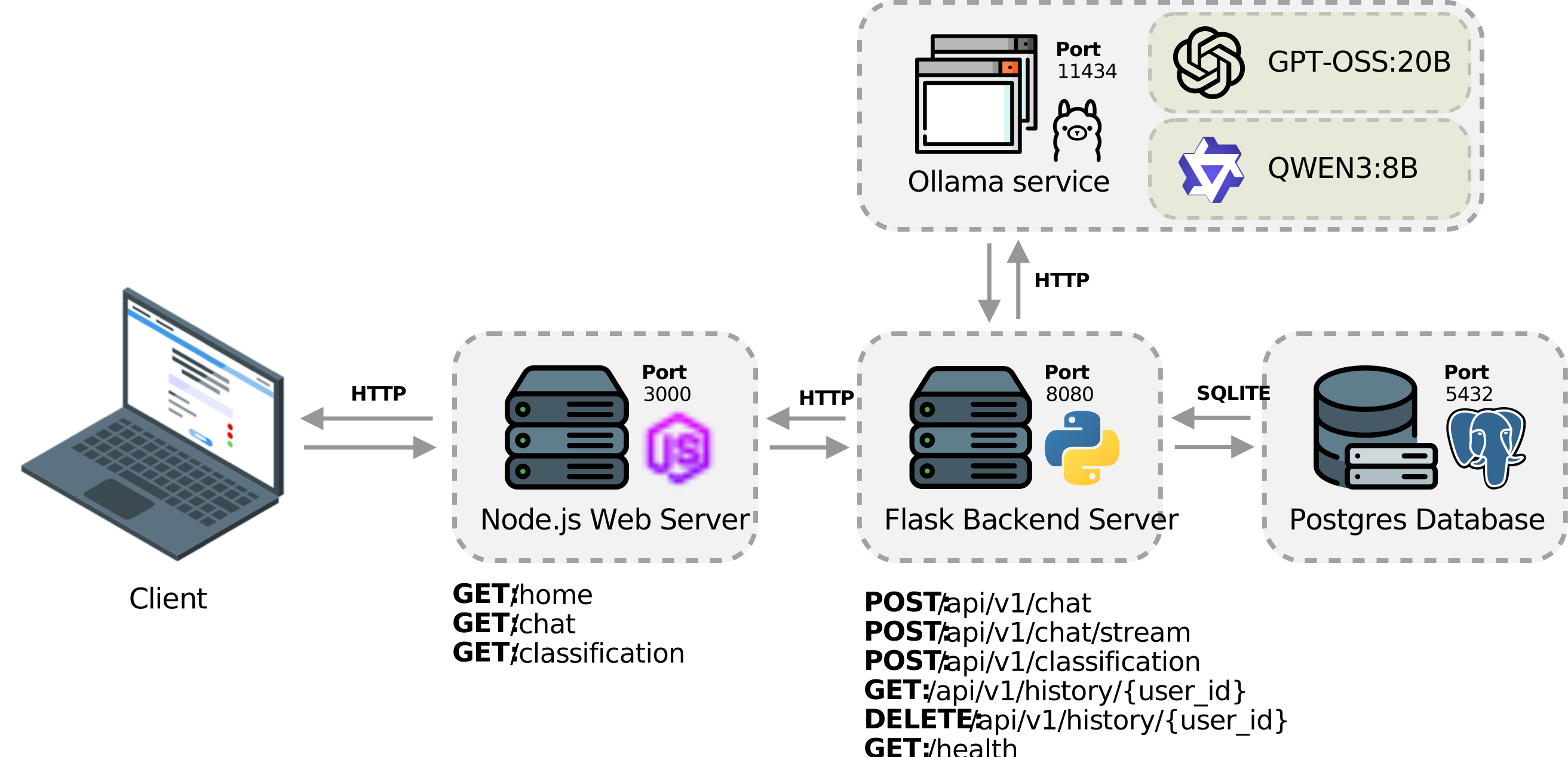
Skysafe is a project I personally wrote and managed. It was financed by the Swiss Federal Office of Civil Air Transportation (BAZL) and designed as a distributed LLM plus retrieval architecture that helps users prepare Operational Risk Assessment documentation with grounded answers instead of unsupported chatbot output.

RAG LLM FAISS HNSW BM25 MMR ColBERT reranking Knowledge graphs Node.js Flask PostgreSQL
Read full project breakdown

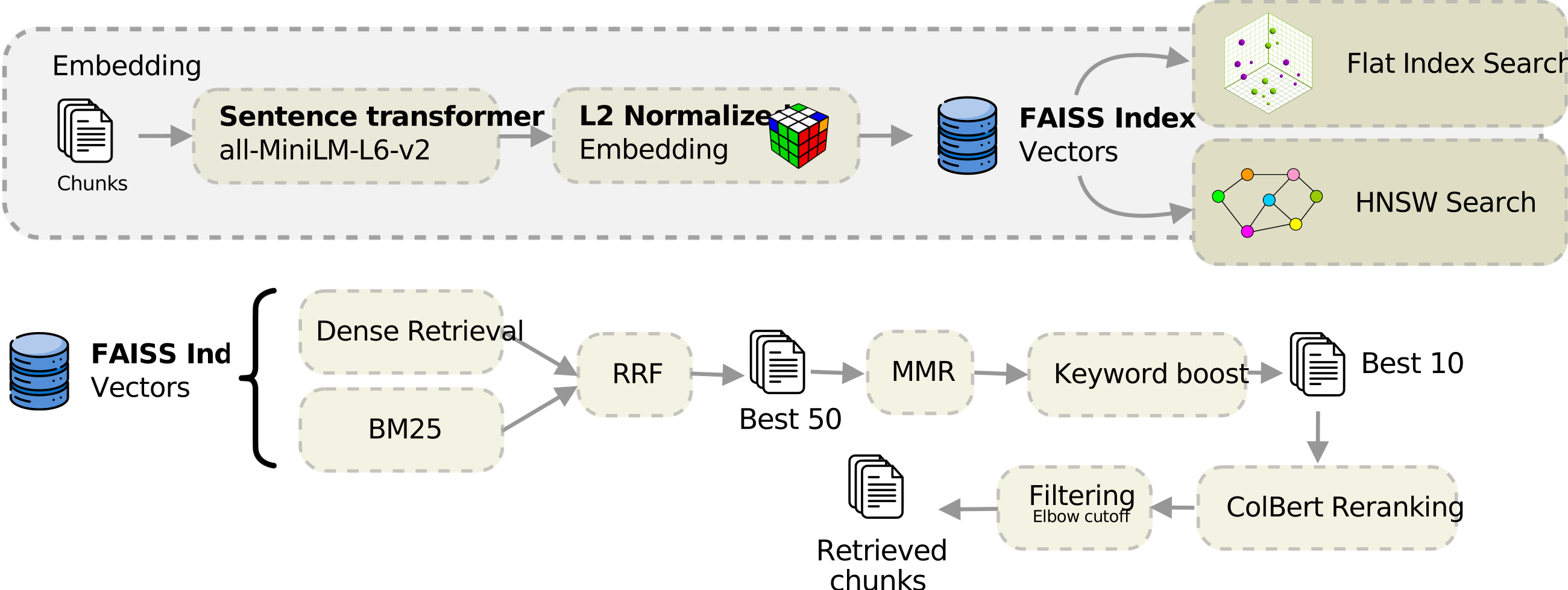
This system was built to guide users through the compilation of ORA requests for BAZL. The core idea is not just to attach a large model to a user interface, but to engineer a retrieval pipeline where chunks of source text are embedded, indexed, scored, re-ranked, and assembled into a context package before the model answers.

Candidate chunks are extracted from the indexed document corpus starting from a natural-language query. They are then filtered and re-ranked through dense retrieval, keyword matching, and reranking stages to create a trustworthy knowledge base for the model. The project also investigated the use of knowledge graphs as an additional retrieval improvement layer.

  • Distributed architecture with Node.js frontend, Flask backend orchestration, Ollama-based model execution, and PostgreSQL persistence.
  • Designed for regulatory text, where precision, grounding, and traceability matter much more than generic fluency.
  • Open-source codebase intended as a practical compliance support system rather than a demo chatbot.
UAV Controller Optimization

A simulation-driven framework for quieter, more efficient drone motion and controller tuning.

2025

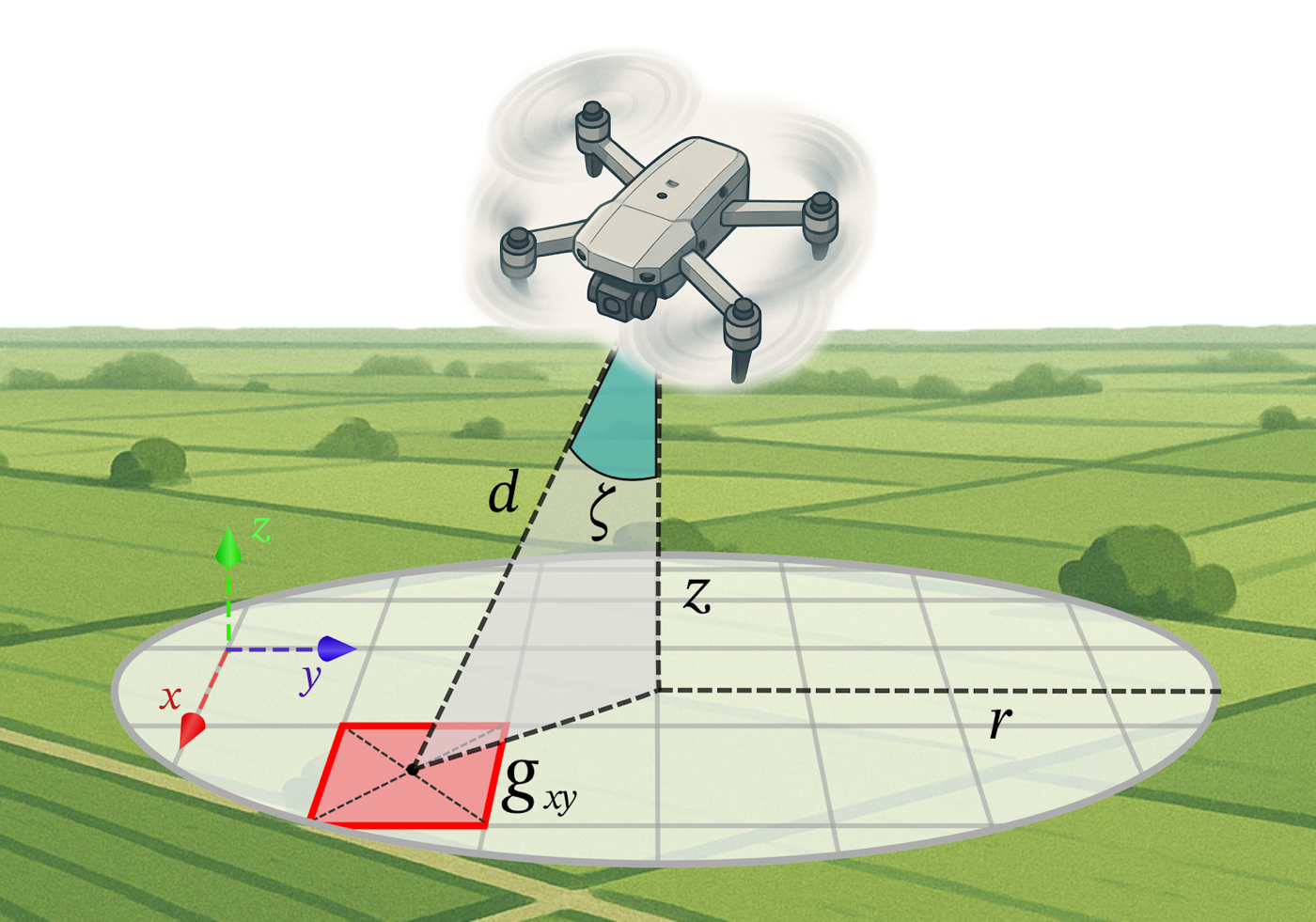
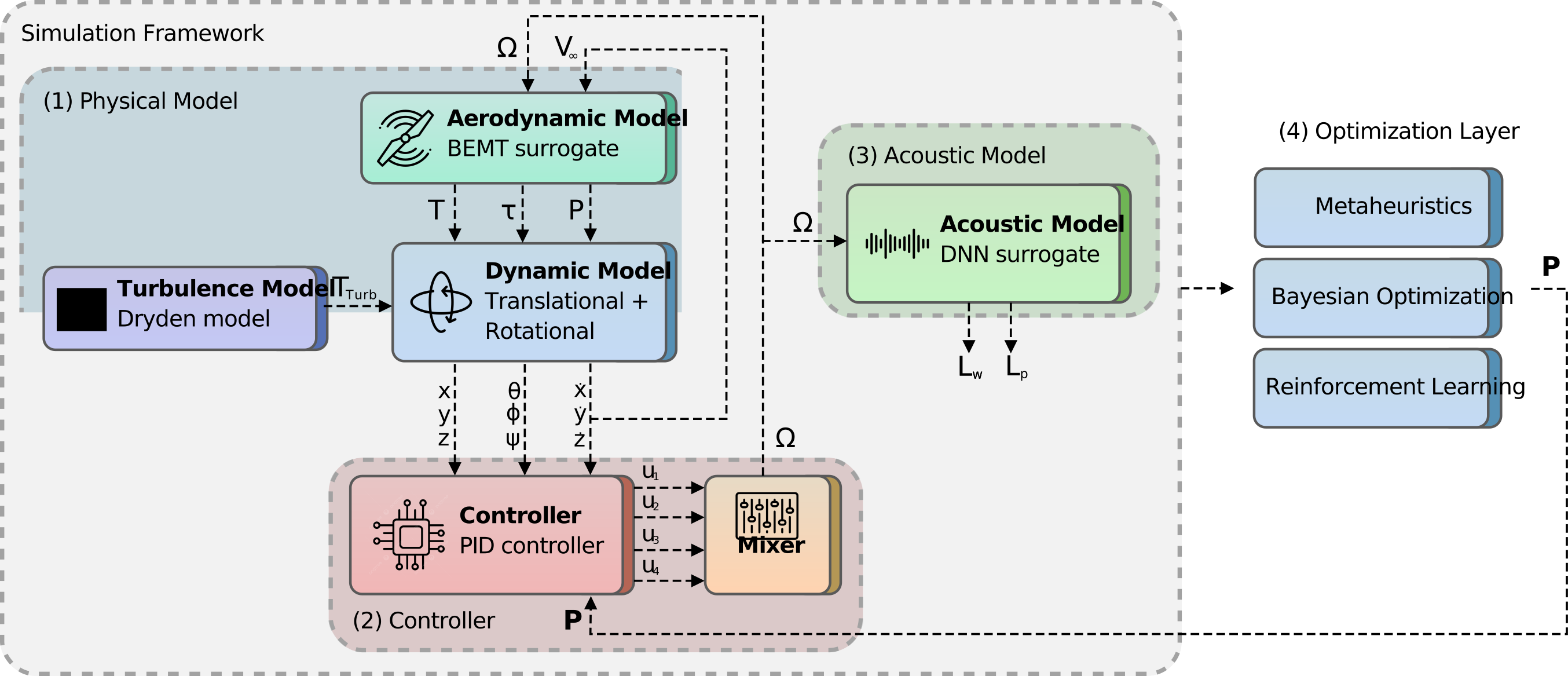
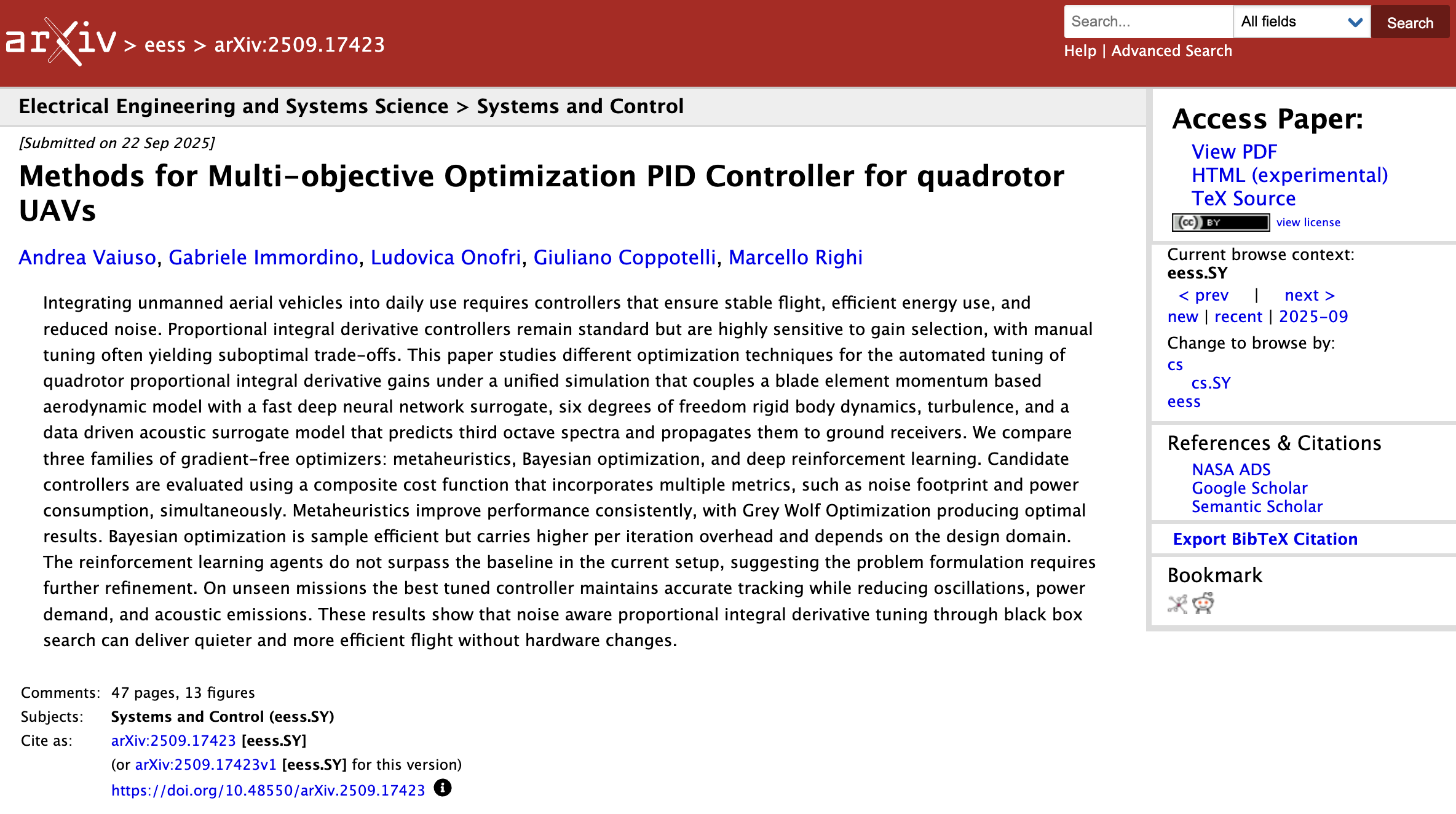
This project is an automated optimization pipeline for making UAV movement less disturbing to the public. It couples aerodynamic simulation, a PID-based control system, optimization loops, and acoustic reasoning to iteratively improve maneuvers, trajectories, energy usage, and noise.

UAV PID controller Aerodynamics Bayesian optimization Reinforcement learning Metaheuristics Acoustic modeling Flight dynamics
Read full project breakdown

The framework binds an aerodynamic simulator to an open-source PID-based drone controller and evaluates alternative control strategies under iterative optimization. The goal is not only to improve performance, but also to reduce disturbance, battery consumption, trajectory aggressiveness, and rotor loudness.

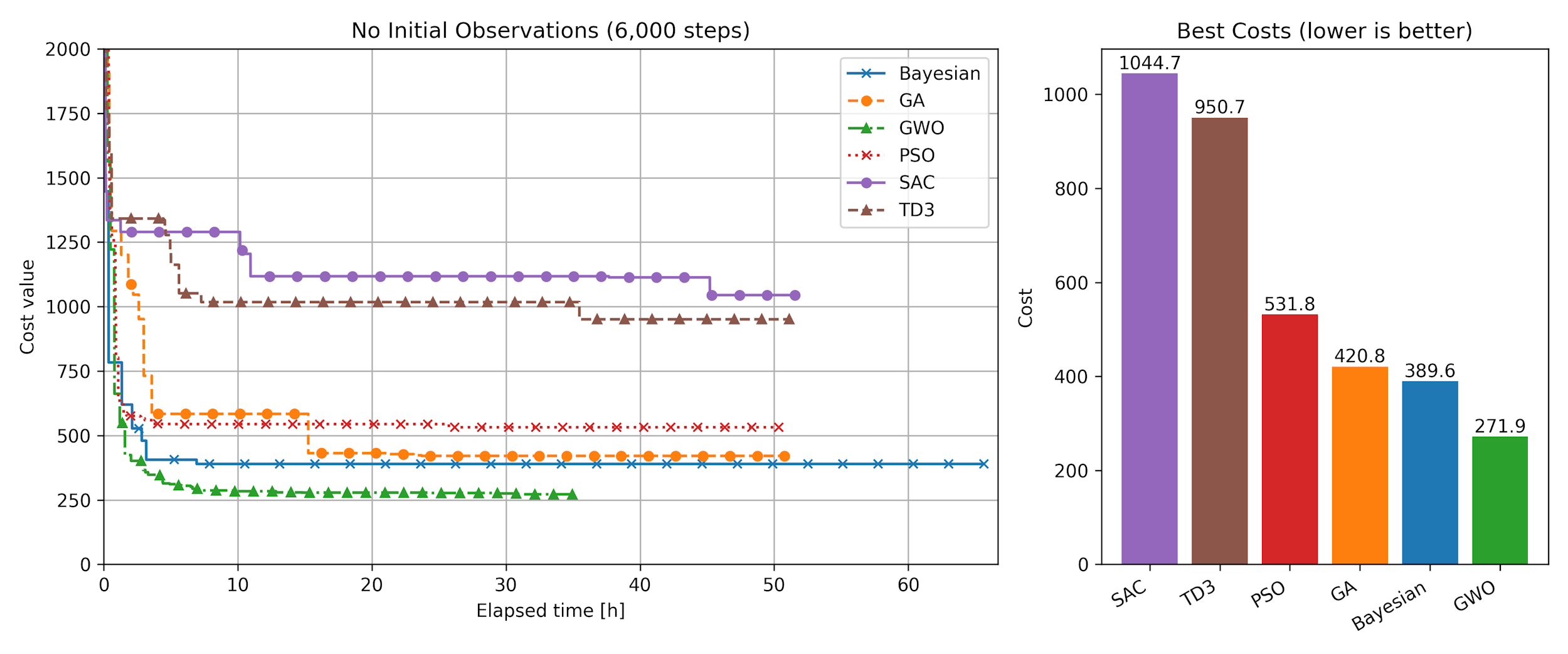
The optimization layer compares multiple approaches, including Bayesian optimization, reinforcement learning, and metaheuristic methods, and studies how they perform under the same physical simulation setup. This makes the project both a control-engineering investigation and a methodological benchmark.

  • Unified simulation pipeline combining physical models, control logic, and acoustic proxy modeling.
  • Optimization campaign focused on public disturbance reduction and flight efficiency.
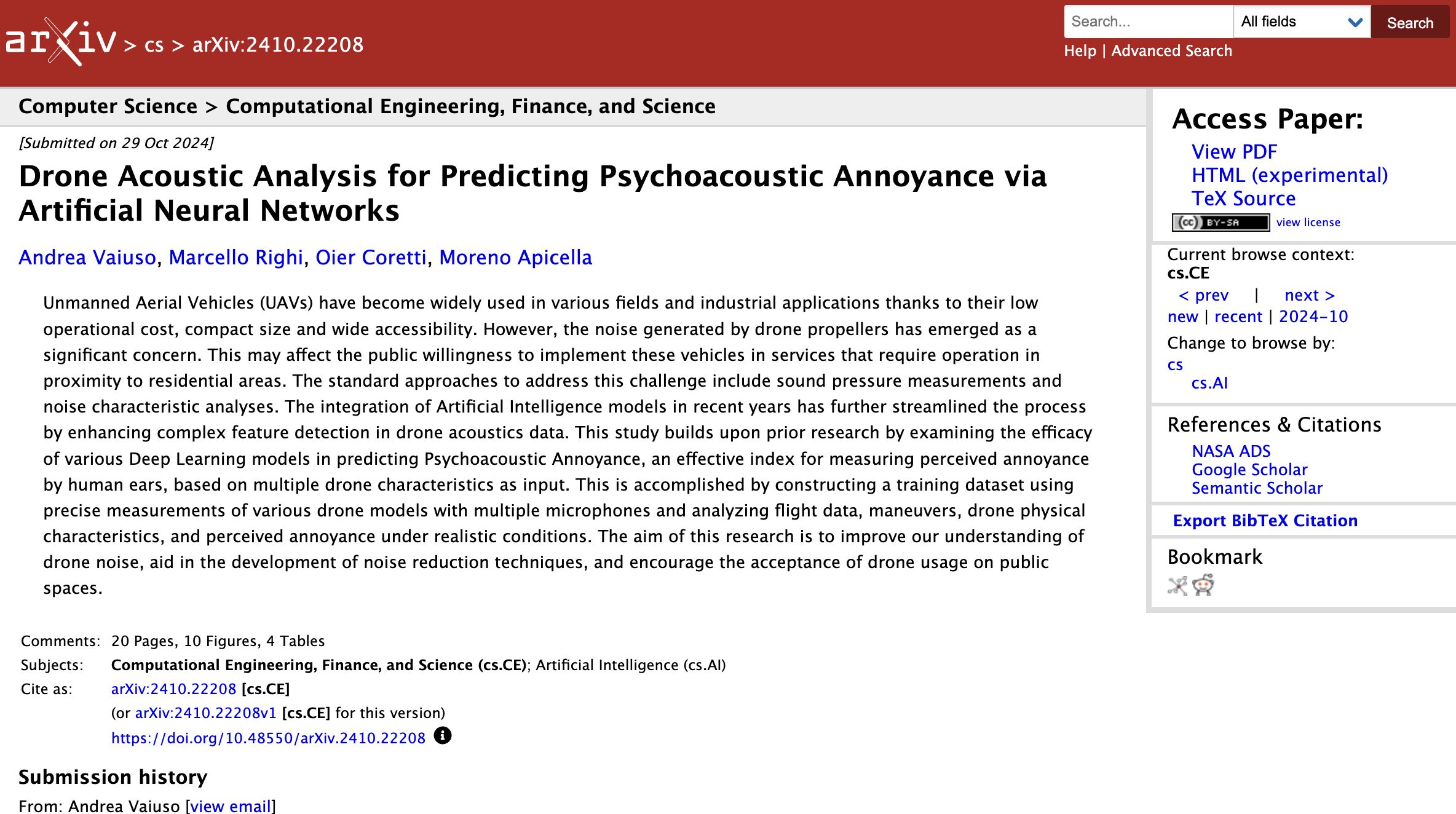
  • Research direction that naturally connects to drone acoustics and psychoacoustic annoyance modeling.

Fluidodynamic Neural Surrogate

Graph-based surrogate modeling for high-dimensional CFD prediction on complex aerodynamic meshes.

2024–2025

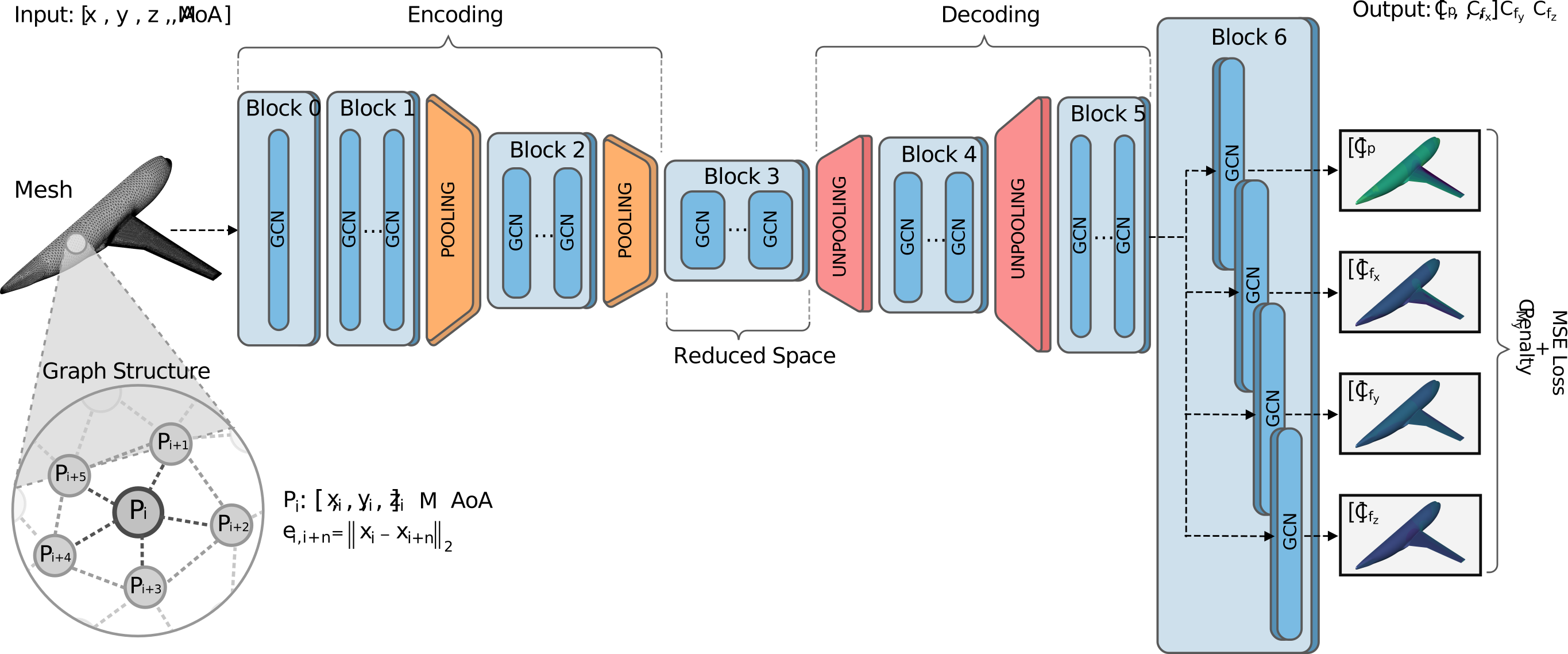
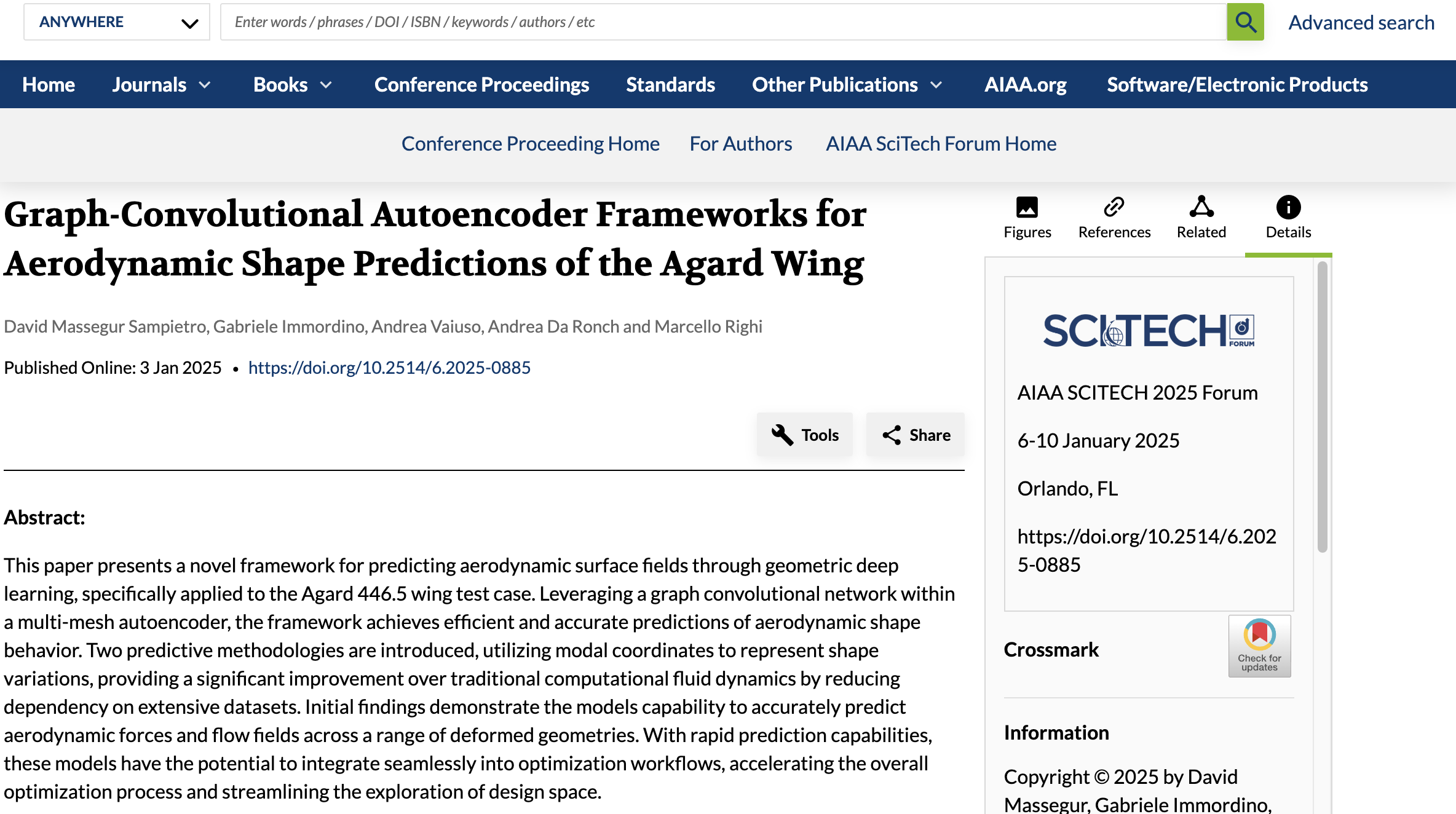
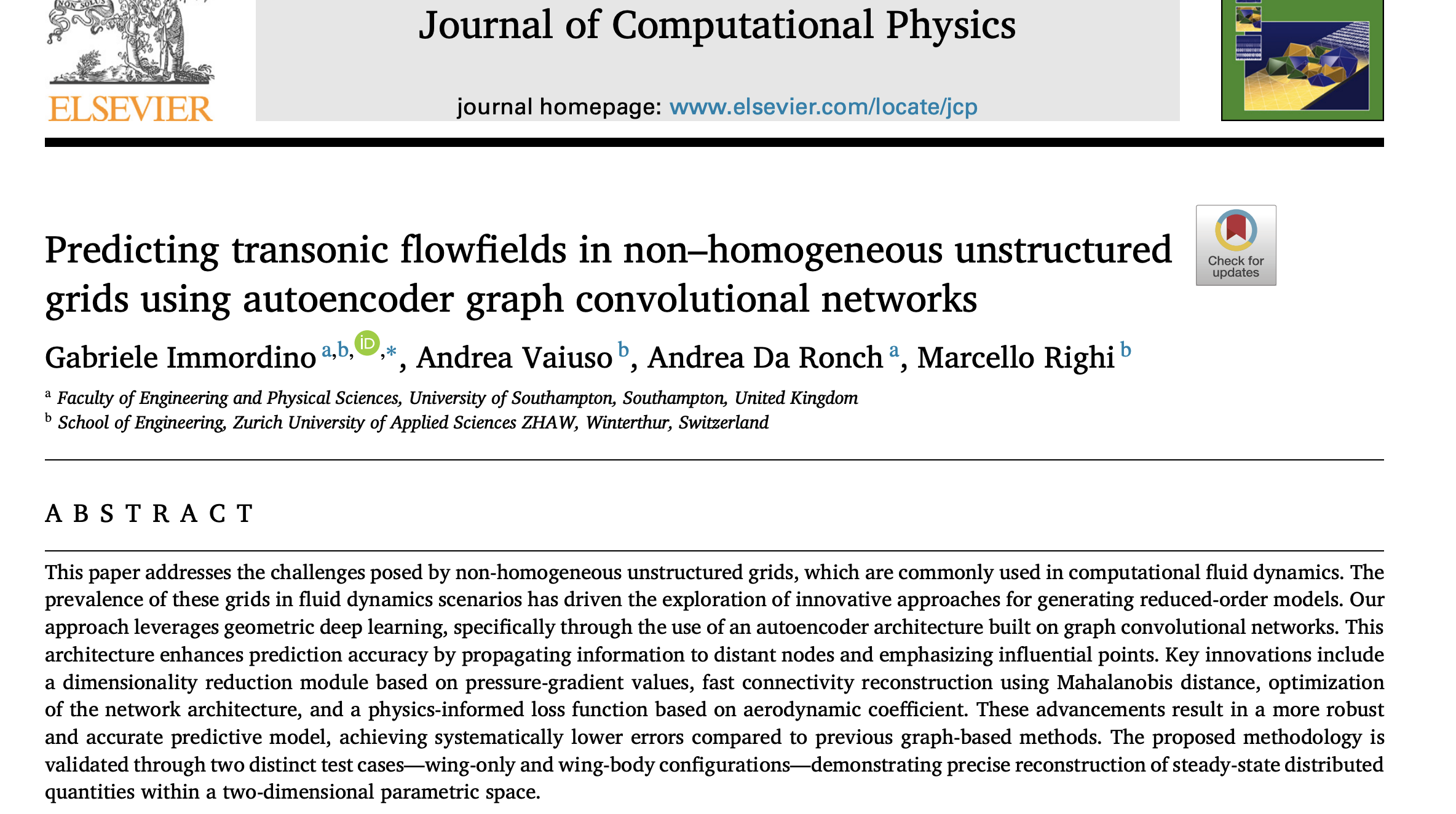
This project tackled a difficult objective: predicting fluid-dynamic physical quantities on three-dimensional grids with thousands of points using graph-based neural surrogates. A graph autoencoder became the backbone for a powerful CFD surrogate capable of drastically reducing the computational burden of conventional simulation.

CFD Graph neural networks Graph autoencoder Mesh graphs Scientific machine learning Dimensionality reduction
Read full project breakdown

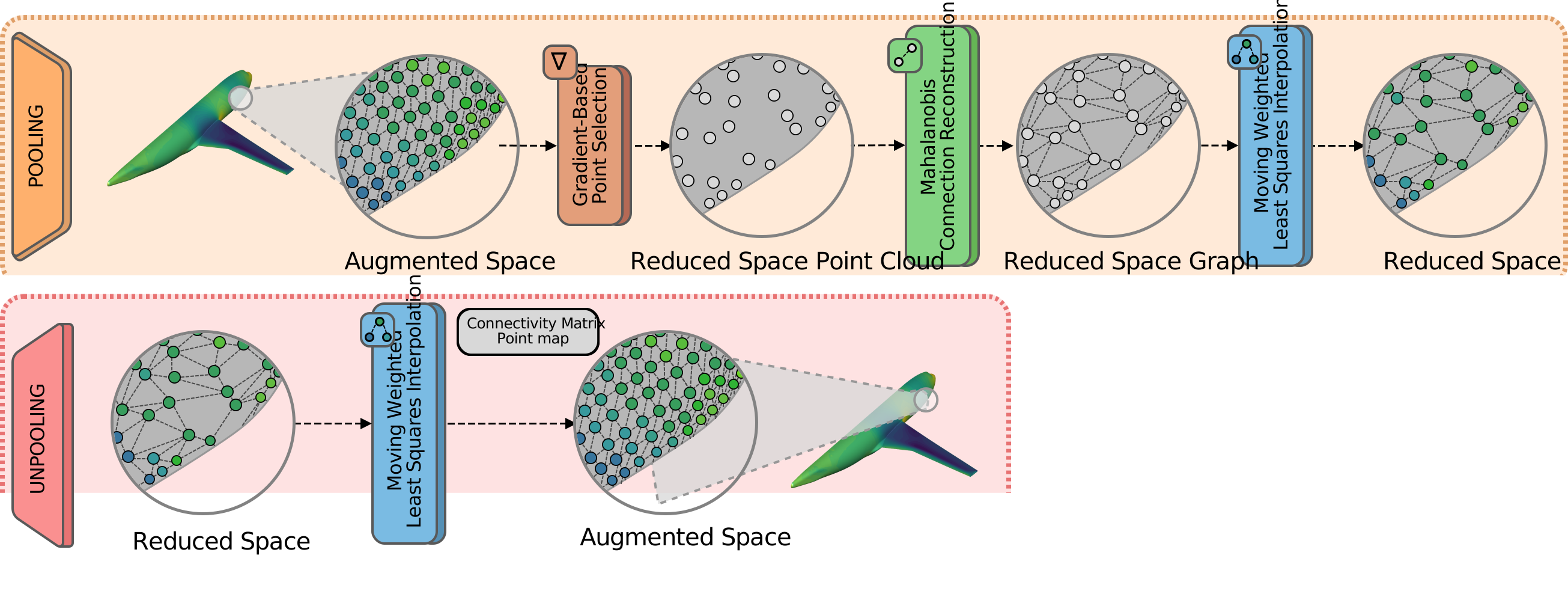
This work supported a PhD-level research effort aimed at building a surrogate architecture capable of predicting aerodynamic quantities over very large 3D CFD meshes. The main challenge was dimensionality reduction without destroying physically relevant structure, especially in nonlinear or high-gradient regions.

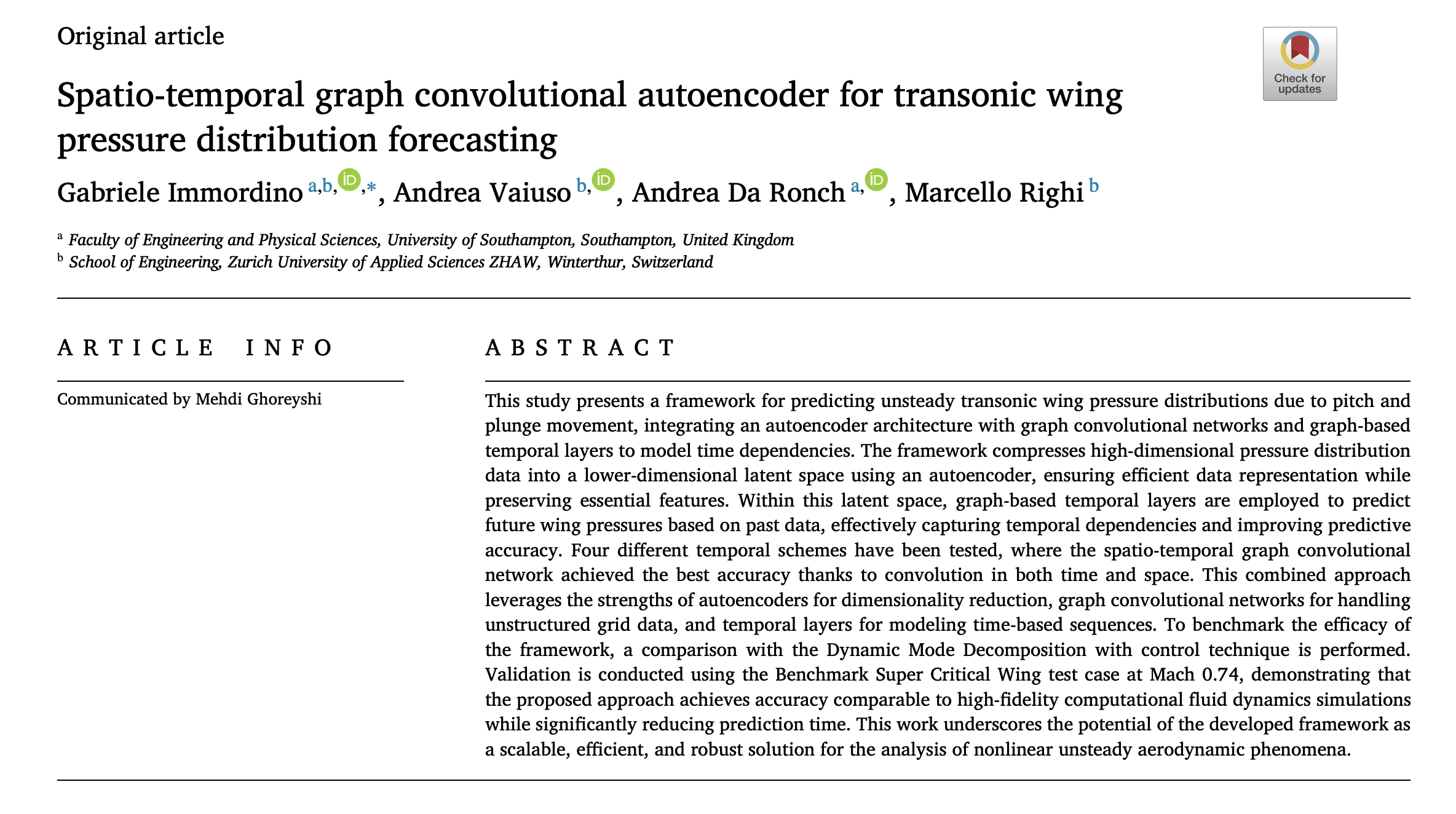
A graph-based autoencoder emerged as the strongest architectural choice. It enabled mesh-aware encoding and reconstruction while preserving useful geometric and aerodynamic relations across nodes. The project also evolved into spatio-temporal forecasting work, extending the surrogate idea from steady predictions to dynamic pressure-field evolution.

  • Graph encoders and decoders operating directly on aerodynamic mesh structures.
  • Reduced-space and reconstruction strategies for large-scale scientific simulation data.
  • Research direction with strong evidence of drastic compute reduction relative to standard CFD.

Bayesian Data Fusion

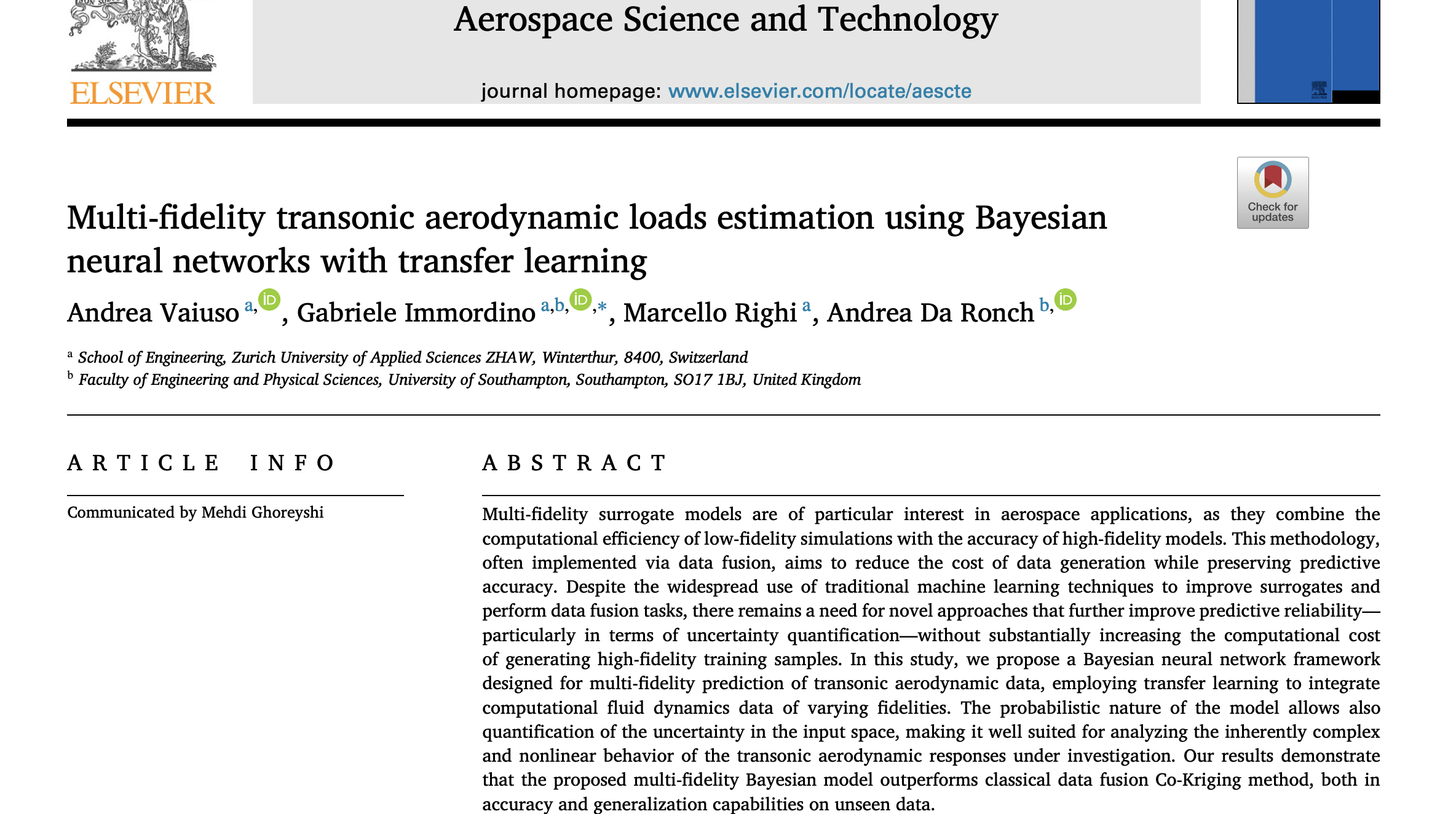
Multi-fidelity deep learning for uncertainty-aware aerodynamic prediction.

2023–2024

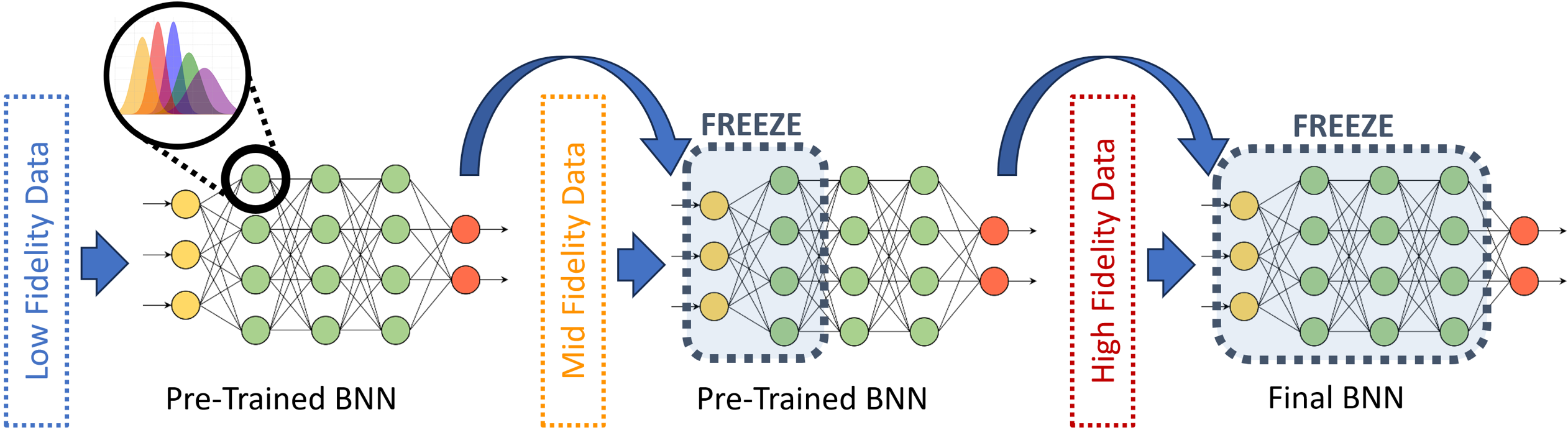
This project studied how predictions change across simulation fidelities and how uncertainty should be quantified when multiple fidelity levels coexist. I designed and developed a deep-learning-based multi-fidelity fusion model that integrates data of different quality while estimating uncertainty bands.

Bayesian neural networks Uncertainty quantification Multi-fidelity modeling Data fusion Scientific machine learning
Read full project breakdown

In many simulation workflows, the same input can produce different outcomes depending on the fidelity of the generating model. This project addresses that mismatch directly by building a stochastic neural architecture that can learn from multiple fidelity levels rather than treating them as isolated datasets.

The resulting model estimates both predictions and uncertainty bands, making it more suitable for engineering decision support where the confidence of the estimate matters as much as the estimate itself. Validation was performed across two aerodynamic case studies.

  • Deep-learning-based fusion of low-, medium-, and high-fidelity simulation sources.
  • Uncertainty-aware output rather than purely deterministic regression.
  • Transfer-learning logic used to extract more value from scarce high-fidelity data.

Campus Smart Parking

A multi-layer smart-city architecture combining sensing, machine learning, probabilistic fusion, and secure services.

2022–2023

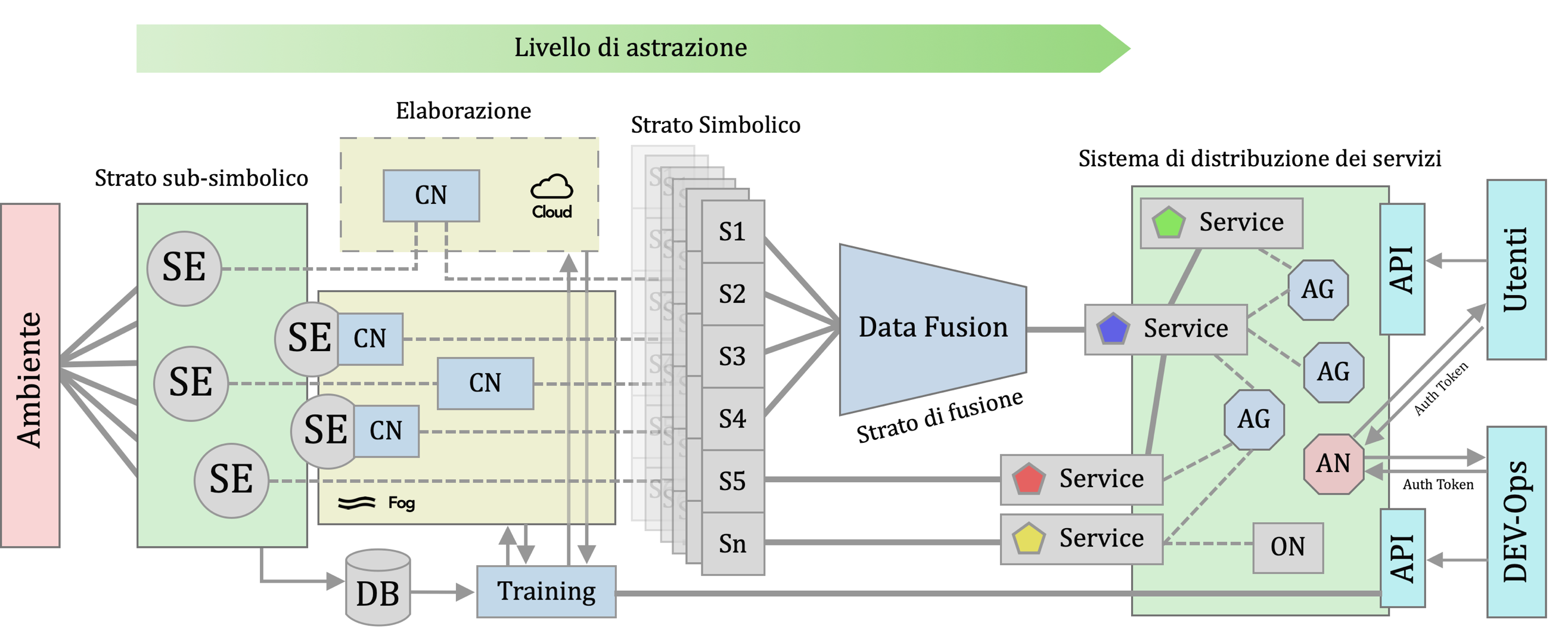
This architecture focuses on the design and implementation of an intelligent smart-parking system based on heterogeneous data fusion in a distributed environment. It combines sensing, machine-learning processing, symbolic reasoning, probabilistic fusion, service distribution, and explicit security and performance considerations.

Smart parking IoT Distributed systems Data fusion Probabilistic inference Service-oriented architecture
Read full project breakdown

The system was structured as a layered architecture rather than a single monolithic application. Sensor data, reasoning modules, machine-learning components, and service interfaces were organized to support both predictive behavior and interpretable higher-level decision making.

Particular attention was given to security and performance evaluation, which is critical for distributed smart-city systems operating on heterogeneous signals and constrained infrastructure.

Products and independent creations

Consumer apps and personal creative projects

The portfolio also includes independent mobile products and creative work. Their actions are grouped at the bottom of each card so navigation and external references stay visually tidy.

MotorHub icon

MotorHub

2025–2026

MotorHub is a social platform for vehicle enthusiasts, combining event planning, AI-powered maintenance support, and cloud-synchronized digital service books through a fully self-built backend stack.

Cloudflare Workers D1 R2 Workers AI AWS Bedrock OAuth JWT
FlashLingo icon

FlashLingo

2025–2026

FlashLingo is a free language-learning app centered on customizable flashcards, light gamification, intuitive study flows, and memory reinforcement through interactive practice.

Flashcards Gamified learning iOS Education technology
James chatbot icon

James – Emo Chatbot

Personal project

An emotional chatbot project exploring personality-driven dialogue, emotional context, and how conversational systems can maintain a coherent social character.

Read more

The project experiments with dialogue flow, human-computer interaction, and conversational identity. It is less about a generic assistant and more about emotional coherence, personality modeling, and natural interaction design.

Creative projects icon

One of Us

Personal project

A social-deduction board game I designed and physically produced end-to-end, from mechanics and narrative to graphics, playtesting, and printing.

Read more

Set on a stranded spaceship, the game asks players to cooperate on repairs while hidden saboteurs create chaos. The finished result is a fully playable original board game that reflects creative direction, systems thinking, and complete execution from concept to physical production.

Film making icon

Film Making

2013–2023

Filmmaking helped me develop strong visual perception, composition, storytelling, and narrative-structure skills that now feed directly into design and presentation work.

Read more

Omnia Vincit Amor was my first short film and won the public prize at the Sicily Queer Filmfest in 2013. Path is an experimental short about life in Switzerland as a foreigner.